
Healthcare HVAC Infrastructure Renewal: Reducing Risk While Improving Performance
Hospitals are increasingly dependent on HVAC and building infrastructure that has exceeded its intended lifecycle. As systems age, facilities face increasing risk of failures, emergency repairs, and rising energy and maintenance costs.
Healthcare HVAC infrastructure renewal is not simply about replacement. It is a technical, phased, and energy-conscious strategy to reduce risk, maintain compliance, and improve operational resilience without disrupting patient care.

A Clear Path Forward
A focused HVAC infrastructure renewal strategy delivers measurable outcomes:
-
- Reduced outage risk
- Lower energy and operating costs
- Improved compliance readiness
- Extended equipment life
- A clear, capital-aligned planning roadmap
A Hospital HVAC Infrastructure Renewal Assessment provides system evaluation, risk-based prioritization, a phased renewal roadmap, and identification of energy efficiency opportunities—helping healthcare organizations modernize infrastructure while protecting patient care.
Ready to identify today’s risks and address them with a phased, strategic approach?
Related Blogs

Contingency Planning: Essential for Business Continuity
Rare but impactful events such as power outages, natural disasters, or mechanical failures can wreak havoc on your facility and business. Facing such an emergency without a contingency plan can result in decreased production or service, lost customers and revenue, and loss of confidence by customers, investors, and other stakeholders. In fact, the stakes can be so high that it’s not uncommon for insurance companies to require a formal contingency plan to qualify for business continuity coverage.
The Evolution of Changeover Systems
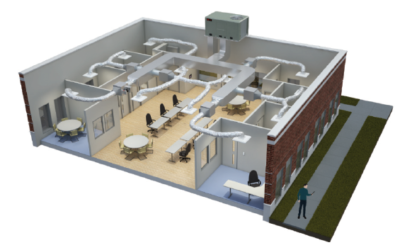
Many light commercial buildings have traditionally used several single-zone, packaged rooftop units with thermostats—often because better systems were thought to be too complicated and/or too expensive to install. If “zoning” was desired in these buildings, a changeover bypass system was traditionally used; this system allowed a single rooftop unit to provide independent temperature control to several zones. However, it used a constant-speed supply fan and a centralized bypass damper, resulting in higher energy use and sound levels than other system alternatives.
Brady Partners with Two Industry Leaders to Provide Water Treatment Services
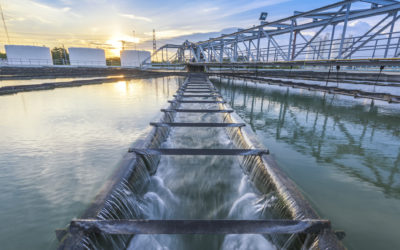
Brady partners with Southeastern Laboratories and ChemSearch FE to provide water treatment solutions across central and eastern North Carolina.