
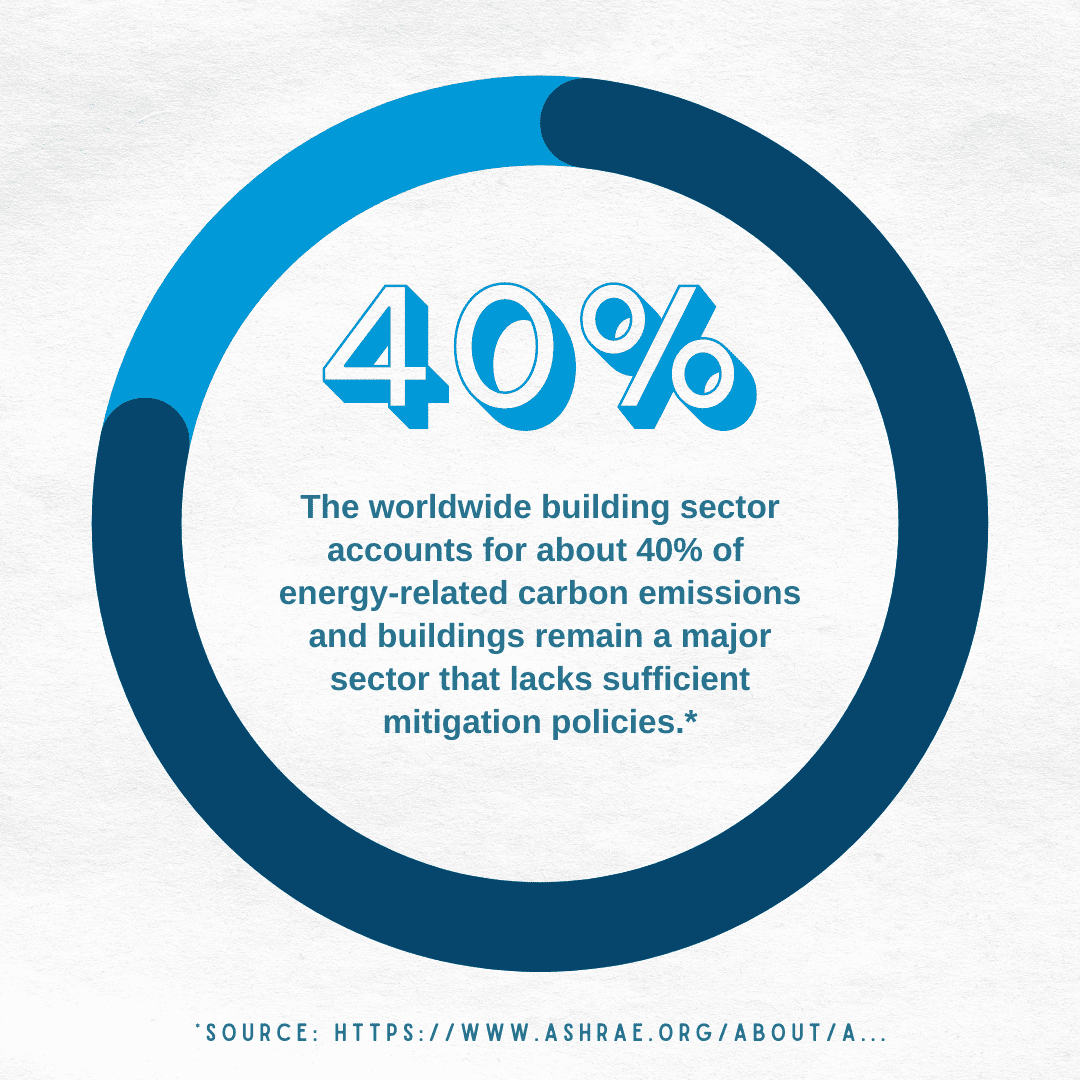
Jurisdictions globally are confronting climate change and recognizing that building decarbonization is an important component in their efforts.
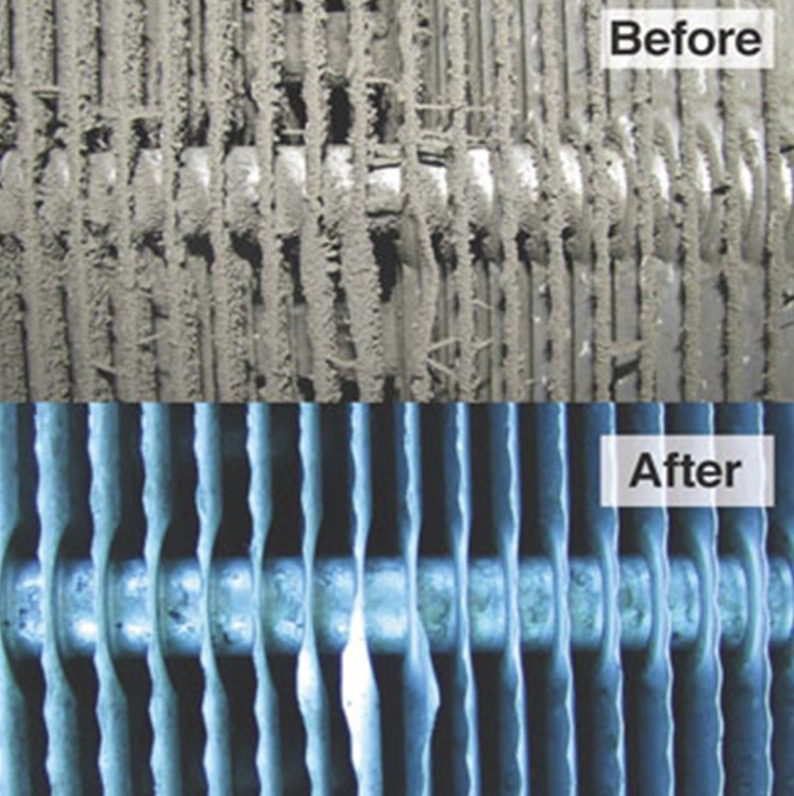
Environmental Coil Optimization destroys the insulating biofilm to ‘release’ dirt and debris that contribute to coil fouling. Coil optimization returns the Air Handling Unit (AHU) to as-new specification to help achieve the benefits listed by the American Society of Heating, Refrigerating and Air-Conditioning Engineers (ASHRAE), while providing substantial and immediate energy efficiency that results in rapid ROI payback.
UVC for Increased Energy Efficiency and Reduced Maintenance

Incorporating UVC technology into building air conditioning systems has many benefits.
-
Improves indoor air quality (IAQ) and employee performance.
-
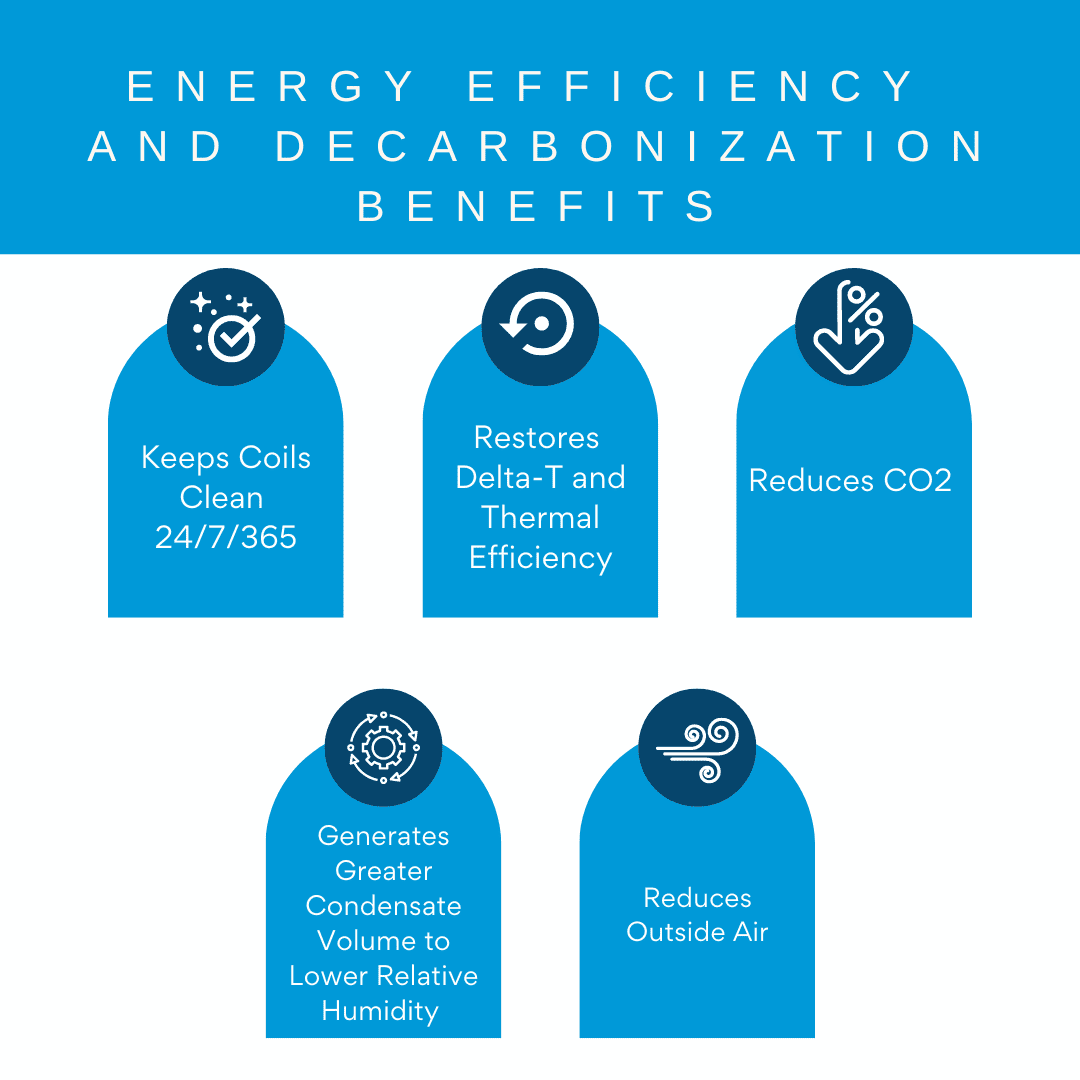
Eliminates insulating biofilm to improve heat exchange and airflow, which has been proven to reduce Air Handling Unit (AHU) energy consumption by about 20%.
-
Reduces workload and improves efficiencies.
-
Eliminates biological growth on coils and in the drain pan that can cause coil fouling and odors.
-
Increases AHU equipment life.
-
Mitigates risk, liabilities, and cost.
-
Achieves a measurable return on investment (ROI) within one to three years. (Based on usage and energy costs.)
In-AHU and In-Duct UV fixtures, such as the Lumalier AR Series UVC Fixtures, are installed inside ventilation systems. In addition to providing high-level, facility-wide disinfection of airborne infectious pathogens, these fixtures provide facilities with other important benefits.
“UVC can be readily applied to HVAC systems to keep coils, drain pans, and other surfaces clean and free of microbial contamination. UVC maintains heat exchange efficiency, design airflow, and improves indoor air quality by reducing bacteria and mold growth on system components.” “Coil pressure drop is reduced and, therefore, airflow is restored. Because heat transfer also is restored, this combination can result in significant energy savings, with payback of possibly less than 2 years.”
ASHRAE Handbook, 2008, 2011, 2015
Maintenance Benefits
1. Eliminates need for chemical coil cleaning = labor and chemical savings.
2. Eliminates need for pan pills or odor pills in pans or plenums.
3. More efficient system = fewer service issues. Lifecycle of AHU extended by approximately 2 years
Brady is proud to serve as an authorized Lumalier representative. As the leading authority on UV germicidal disinfection, Lumalier offers products designed for a broad range of applications. Lumalier has set the industry benchmark for safe, healthy air disinfection for over 50 years with its client-driven, science-based approach.
We invite you to learn more about how Lumalier and Brady can help improve indoor air quality in your facility.
Related Blogs

Brady Dedicates Second Habitat Home in Greensboro
On Saturday, May 14th, Brady Associates and key community leaders gathered to dedicate the second Habitat for Humanity House sponsored by late founder and chairman Don Brady and his wife, Mary Gay.

Contingency Planning: Essential for Business Continuity
Rare but impactful events such as power outages, natural disasters, or mechanical failures can wreak havoc on your facility and business. Facing such an emergency without a contingency plan can result in decreased production or service, lost customers and revenue, and loss of confidence by customers, investors, and other stakeholders. In fact, the stakes can be so high that it’s not uncommon for insurance companies to require a formal contingency plan to qualify for business continuity coverage.
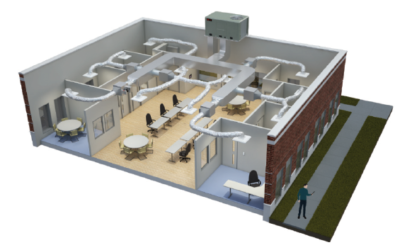
The Evolution of Changeover Systems
Many light commercial buildings have traditionally used several single-zone, packaged rooftop units with thermostats—often because better systems were thought to be too complicated and/or too expensive to install. If “zoning” was desired in these buildings, a changeover bypass system was traditionally used; this system allowed a single rooftop unit to provide independent temperature control to several zones. However, it used a constant-speed supply fan and a centralized bypass damper, resulting in higher energy use and sound levels than other system alternatives.